
How to Search Early County Court Records
Early County court records do not sit in one county-branded public portal. The practical search path starts with the Early County department directory, the Clerk of Superior Court, and the state or circuit system tied to the record. Superior and State Court electronic access may route through Georgia Courts e-access and provider access such as PeachCourt. Those provider tools are account-based and work best when the case number, county, and court are known.
Clerk index records use a different route. The GSCCCA search systems cover real estate, lien, plat, PT-61, UCC, and notary indexes. Probate and marriage matters begin with the Probate Court. Blakely municipal traffic tickets use the city payment channel. When an online search does not return the record, use the office fallback: call or visit the record custodian with names, case type, date range, and copy needs.
- Identify the record type first: Superior, State, Probate, Magistrate, Municipal, sheriff, jail, or clerk index.
- For Superior or State Court files, start with the Clerk of Superior Court or Georgia Courts e-access provider links.
- For land, lien, plat, PT-61, UCC, or notary records, use GSCCCA instead of a case-search tool.
- For probate, marriage, jail, warrant, or traffic records, use the specific office listed for that record type.
- Request a certified copy from the office that keeps the original file if the online result is not enough.
The official Early County homepage is the broad county starting point for notices and local office routing.
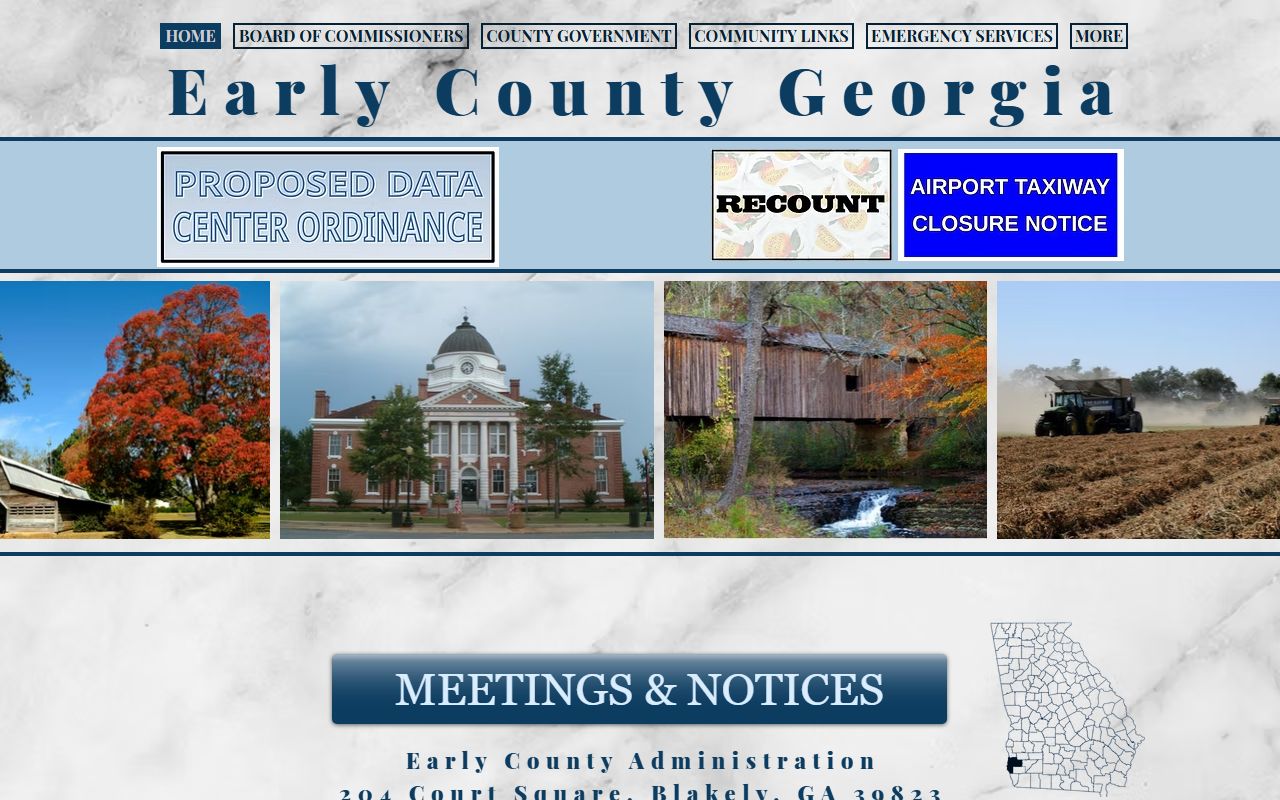
That county homepage is useful for local context, but court record access still depends on the separate clerk, court, probate, sheriff, and city channels.
Early County Court System
Georgia's trial courts include Superior, State, Juvenile, Probate, Magistrate, and Municipal Courts. Early County belongs to the Pataula Judicial Circuit, which also serves Clay, Miller, Quitman, Randolph, Seminole, and Terrell counties. Superior Court is the main trial court of general jurisdiction. It hears felony cases, divorce cases, broad civil matters, and appeals from lower courts. The Clerk of Superior Court manages Early County Superior, State, and Juvenile records for administrative purposes.
State Court can handle misdemeanors, traffic matters, and civil matters not reserved for Superior Court where jurisdiction exists. Probate Court handles estates, wills, guardianships, conservatorships, marriage licenses, and some vital-record functions. Magistrate Court commonly handles warrants, first appearances, preliminary matters, dispossessory cases, and smaller civil claims. Municipal Court handles city ordinance and traffic matters in Blakely.
Case flow: law enforcement or filing event › Magistrate, Municipal, Probate, State, or Superior Court › Pataula Judicial Circuit proceedings › Court of Appeals or Supreme Court of Georgia when an appeal is allowed.
| Court or Office | Main Role | Early County Access Point |
|---|---|---|
| Superior Court | Felony, divorce, major civil, equity, appeals | Clerk of Superior Court, Suite C |
| State Court | Misdemeanor, traffic, limited civil jurisdiction | Clerk of Superior Court records counter |
| Probate Court | Wills, estates, guardianships, marriage licenses | Probate Court, Suite D |
| Magistrate Court | Warrants, first appearances, small civil matters | Call county offices for routing |
| Municipal Court | Blakely traffic and city ordinance matters | City Hall and Government Window |
Early County Court Offices
Court Square in Blakely is the local records core. The Clerk of Superior Court and Probate Court are at 111 Court Square in different suites. Sheriff's Administration also lists a Court Square office for records, civil processes, traffic citations, and warrants. County administration is nearby at 204 Court Square, and Blakely City Hall is at 82 Court Square for city business and municipal traffic routing.
The county department directory shows how Early County sends users to court, sheriff, jail, district attorney, public defender, clerk, and probate resources through a mix of local and state pages.
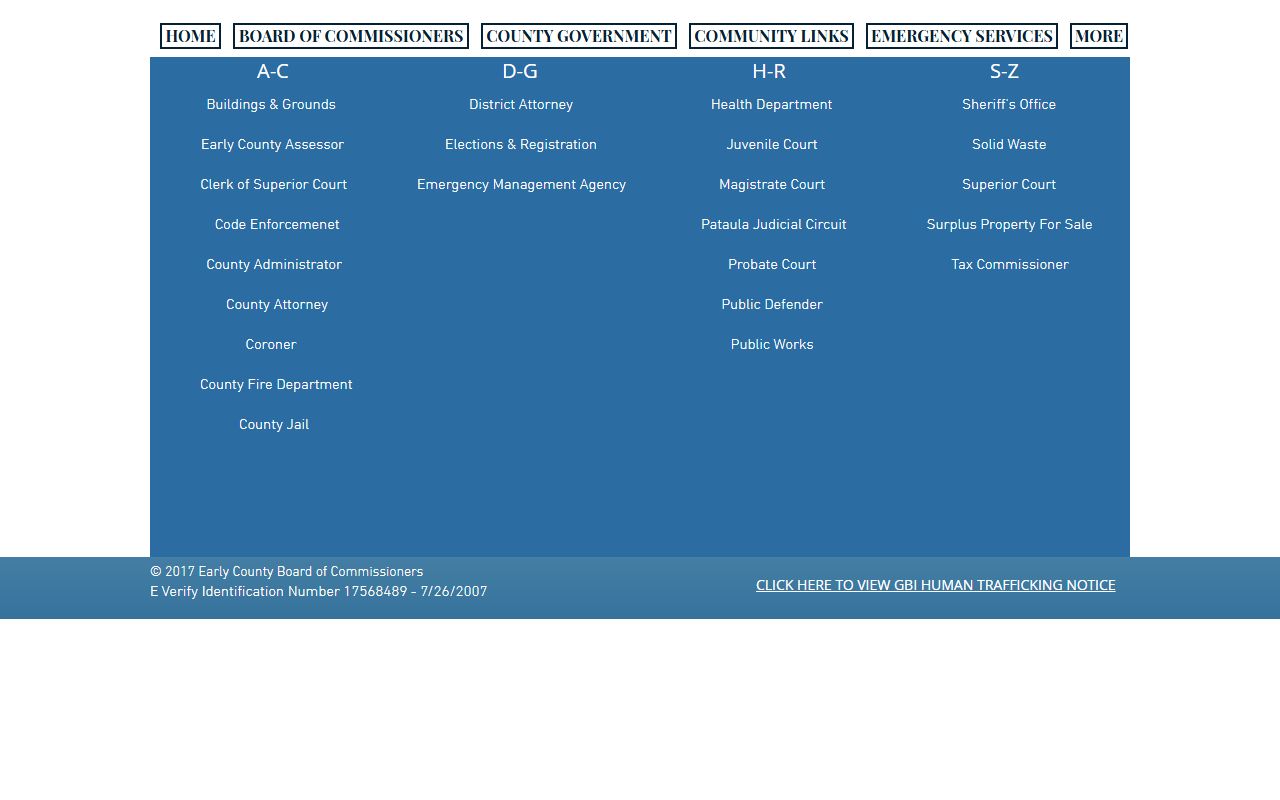
That split is why the office name matters as much as the record name when looking up Early County court records.
Clerk of Superior Court
111 Court Square, Suite C
Blakely, GA 39823
229-723-3033
8:00 AM-5:00 PM Monday-Friday
Probate Court
111 Court Square, Suite D
Blakely, GA 39823
229-207-0049
8:00 AM-5:00 PM Monday-Friday
Sheriff Administration
111 Court Square, Suite B
Blakely, GA 39823
229-723-3214
8:30 AM-5:00 PM Monday-Friday
Early County Court Record Types
Early County records include court case files, dockets, criminal filings, civil pleadings, divorce decrees, probate estates, traffic tickets, warrants, jail custody information, and clerk-maintained indexes. A record may be public, partially redacted, restricted, or sealed depending on the case type and the law that applies. Juvenile, adoption, protected-identifier, and restricted criminal-history records need special care.
- Civil records: complaints, answers, motions, orders, judgments, liens, garnishments, name changes, and trade-name matters.
- Criminal records: charges, accusations, indictments, bond orders, pleas, motions, dispositions, sentencing, and costs.
- Family and divorce records: domestic filings, financial affidavits, parenting forms, decrees, and sealed family materials where ordered.
- Probate records: wills, estates, letters, inventories, guardianships, conservatorships, and estate notices.
- Traffic records: municipal tickets, State Court citations, payment records, failure-to-appear events, and DDS-reported convictions.
What Early County Court Records Show
A court record is not just a name result. It can show the court, case number, case type, filing date, parties, attorneys, judge, docket events, hearings, orders, disposition, judgment, sentence, fine, bond, or certified document history. Early County's online provider access did not expose a sample no-login case page in the research sweep, so official copies and exact field confirmation should come from the clerk or the provider record returned after login.
| Field | What It Shows |
|---|---|
| Case number | The court-assigned number printed on notices, citations, warrants, receipts, or provider records. |
| Court | Superior, State, Juvenile, Probate, Magistrate, or Municipal venue. |
| Parties | Plaintiff, defendant, petitioner, respondent, decedent, ward, applicant, or other role. |
| Docket entries | Filings, notices, hearings, continuances, orders, judgments, pleas, and sentencing entries. |
| Disposition | The outcome, such as dismissed, granted, denied, guilty, not guilty, closed, or transferred. |
| Financials | Filing fees, service fees, fines, costs, restitution, bond, publication charges, or copy fees. |
Early County Court Access Laws
Georgia law broadly favors access to public records, but court files and criminal-history records are controlled by more than one rule. O.C.G.A. 50-18-70 and 50-18-71 set the Open Records Act framework for public agency records, timing, inspection, and costs. Court case files also rely on Uniform Superior Court Rule 21, which says court records are public unless access is limited by law or court order.
Key access rules: O.C.G.A. 50-18-70 supports public inspection of government records; Uniform Superior Court Rule 21 controls limits on court-file access; O.C.G.A. 35-3-37 controls Georgia criminal-history restriction.
The Georgia open-records request example shows the kind of contact and description fields agencies may need for a written request.
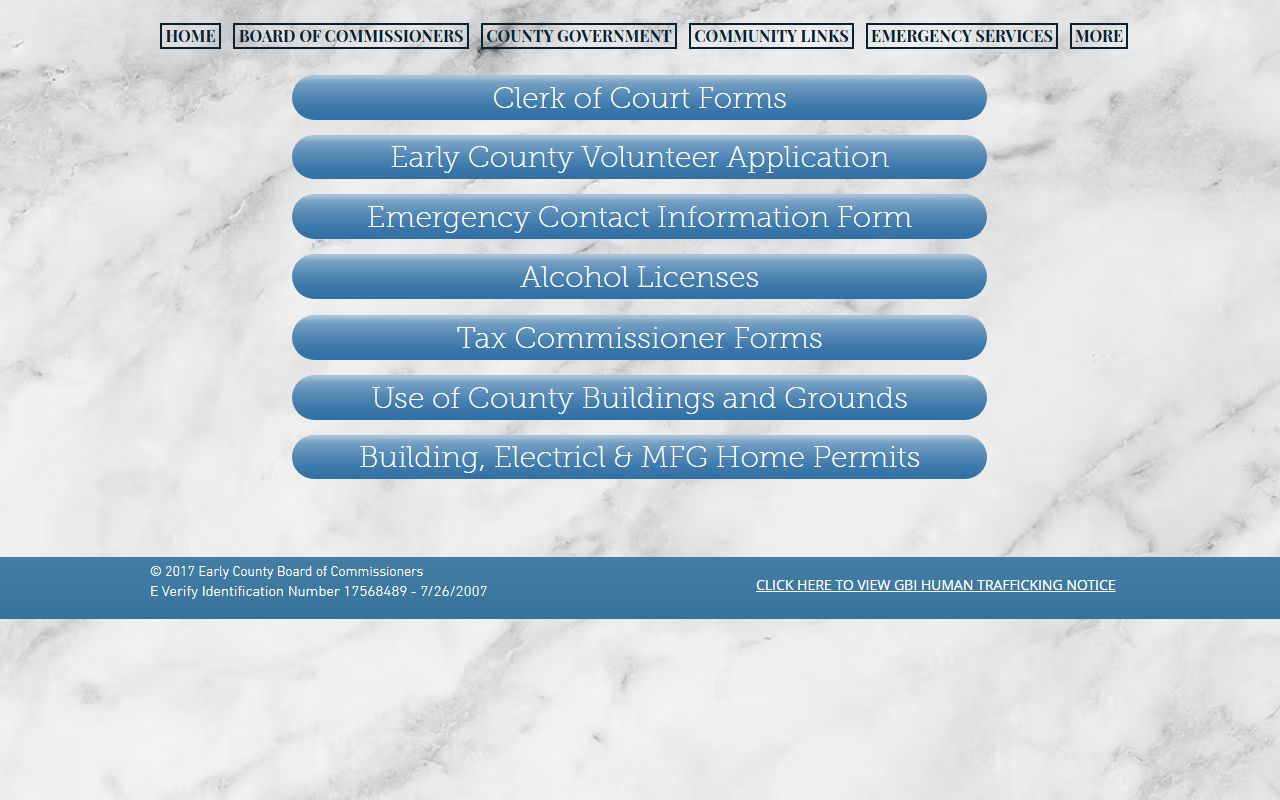
Early County's own forms page is narrower than the full public-records process, so record seekers often need the specific custodian named by the court, clerk, sheriff, or probate source.
Restricted Early County Court Records
Not every court record is open for public review. Juvenile records are restricted under Georgia's juvenile code and should not be treated like adult civil or criminal files. Adoption records are sealed. Protective-order identifier pages and sensitive personal identifiers may be redacted or sealed under court rules. Probate files that include medical, capacity, guardianship, or conservatorship details may also have limited access.
Criminal-history restriction is separate from a court case file. GBI explains that O.C.G.A. 35-3-37 can restrict qualifying criminal-history information from non-criminal-justice disclosure. For arrests after July 1, 2013, the person generally contacts the prosecutor. Older arrests may use the arresting agency path. A denied request may be appealed to Superior Court within the state-law time limit.
Early County Sheriff and Jail Records
The Early County Sheriff's Office is led by Sheriff William C. Price and operates the Early County Jail on East South Boulevard. The jail has 74 beds and houses pretrial inmates, post-trial inmates sentenced to the facility, city inmates, and state inmates. No verified official online Early County jail roster was found, so current custody checks should start with the jail or sheriff by phone.
Sheriff Administration at Court Square handles agency records, disbursement of records to the Clerk of Court, traffic citations, civil processes, and warrants. The civil division serves court papers and executes court orders such as evictions, writs of possession, and judgment collections. Custody notifications can also use Georgia VINELink, while state prison records belong to Georgia DOC, not the county jail.
Early County Probate and Vital Records
Marriage records and probate files do not follow the same path as divorce decrees. Marriage licenses and many marriage records route through Probate Court, which Georgia DPH lists as an Early County vital-records office. Divorce decrees are Superior Court records and should be requested from the Clerk of Superior Court in the county where the divorce was granted. DPH may confirm divorce information in some contexts, but it does not hold certified divorce decrees.
- Testator
- The person who made a will.
- Executor
- The person named to manage an estate under a will.
- Administrator
- The person appointed when an estate needs administration without a named executor.
- Guardianship
- A Probate Court case involving legal authority to care for a person.
The county map page helps place the Court Square offices that hold probate, clerk, and sheriff administration records.
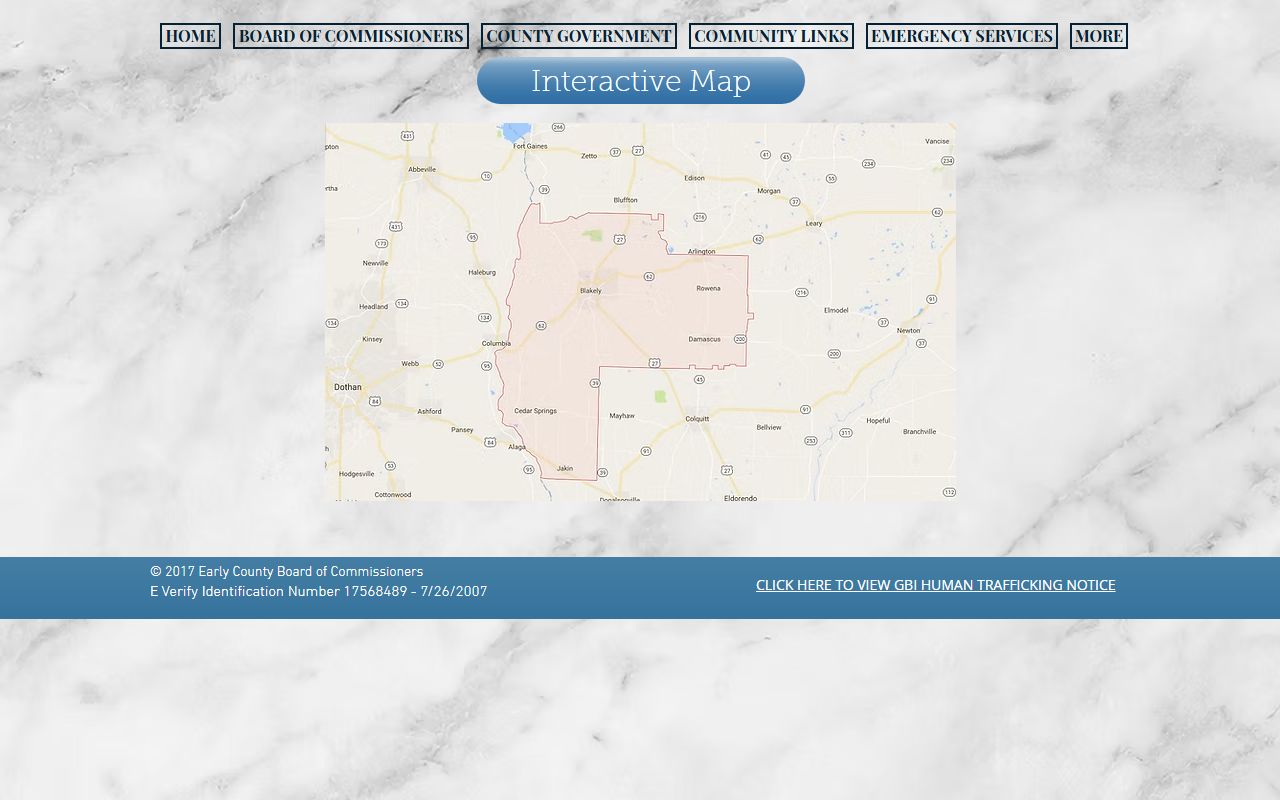
The map context reinforces that a courthouse visit for records may involve more than one nearby office.
Early County Traffic Records
Traffic records depend on the issuing court. Blakely municipal traffic tickets use the Government Window payment channel and the Municipal Court Clerk. Some sheriff or State Court citations may route through the Clerk of Superior Court. Georgia Courts warns that the state does not maintain one centralized traffic-citation database, and vendor systems may need time before a ticket appears online.
A court traffic record is different from a Georgia DDS motor vehicle report. The court record shows the citation, court date, plea or payment, disposition, fine, and failure-to-appear action. The DDS record shows convictions reported by courts, license status, points, suspensions, and reinstatement steps. DDS offers 3-year, 7-year, and lifetime MVR options through online, in-person, mail, and DDS 2 GO channels.
Early County Court Records Fees
The Pataula Superior Court filing-fee source gives the clearest official fee schedule found for many Superior Court filing and copy tasks. It lists civil filing fees, sheriff service charges, publication costs, notary certificate fees, trade-name registration, and copy charges. Probate Court fees were not posted in the official sources reviewed, so Probate Court should be called before filing or ordering certified probate copies.
| Item | Fee or Rule |
|---|---|
| General civil filing | $210 plus applicable service fees |
| Family violence filing | No fee |
| Uncertified copies, no assistance | $0.50 per page |
| Uncertified copies, with assistance | $1 per page |
| Certified or exemplified copies | $2.50 first page, then $0.50 each additional page |
| Trade name registration | $162 plus $40 publication |
Early County Court History
Early County was created in 1818 and named for Peter Early. The official county history notes that several present-day counties were created from land once belonging to Early County, including Calhoun, Clay, Decatur, Dougherty, Grady, Miller, Mitchell, and Seminole. That history can matter for older land, probate, family, and genealogy research because a record may refer to an older county boundary.
The Early County cities page identifies Arlington, Blakely, Damascus, and Jakin, with Blakely as the county seat.
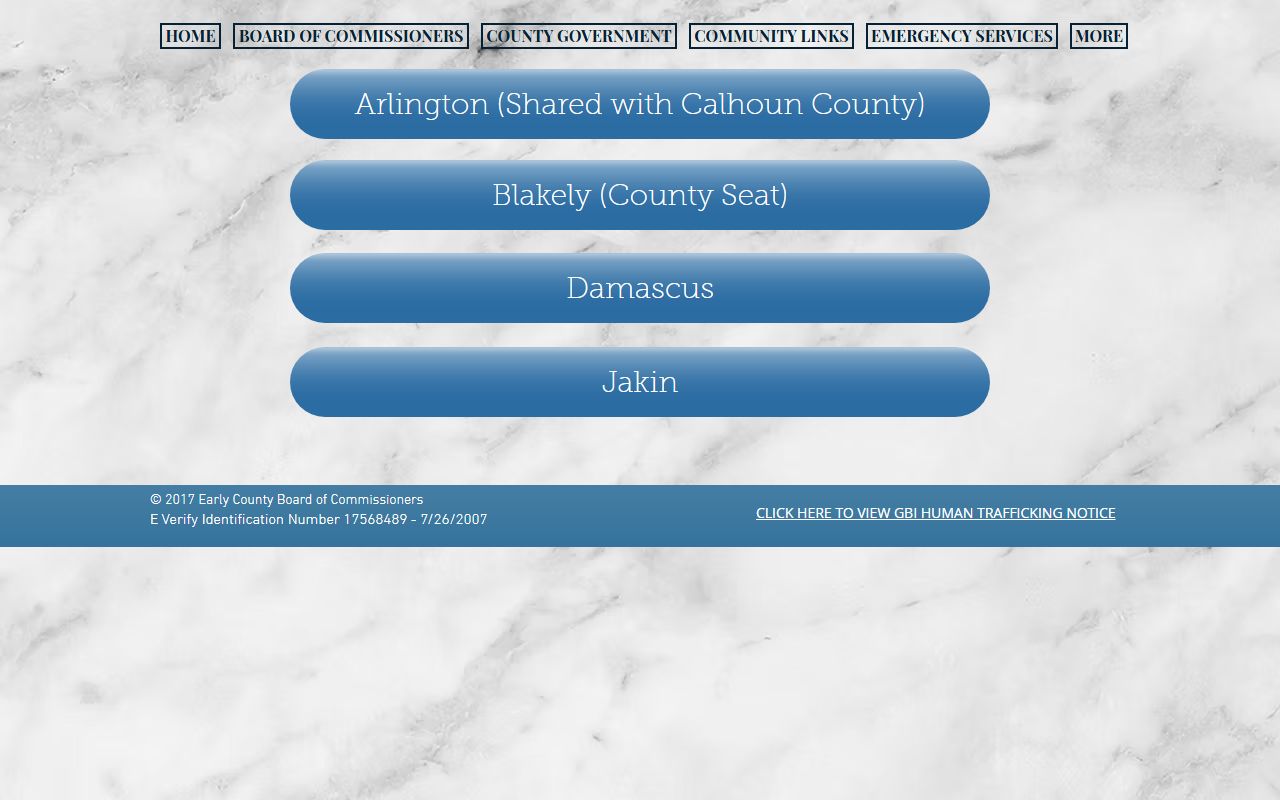
That county-seat detail matters because Blakely is where the Court Square clerk, probate, sheriff administration, and municipal traffic offices cluster.
The same county history page ties Court Square to local identity through Blakely's civic center, peanut farming, and the peanut statue erected on the square in 1954.
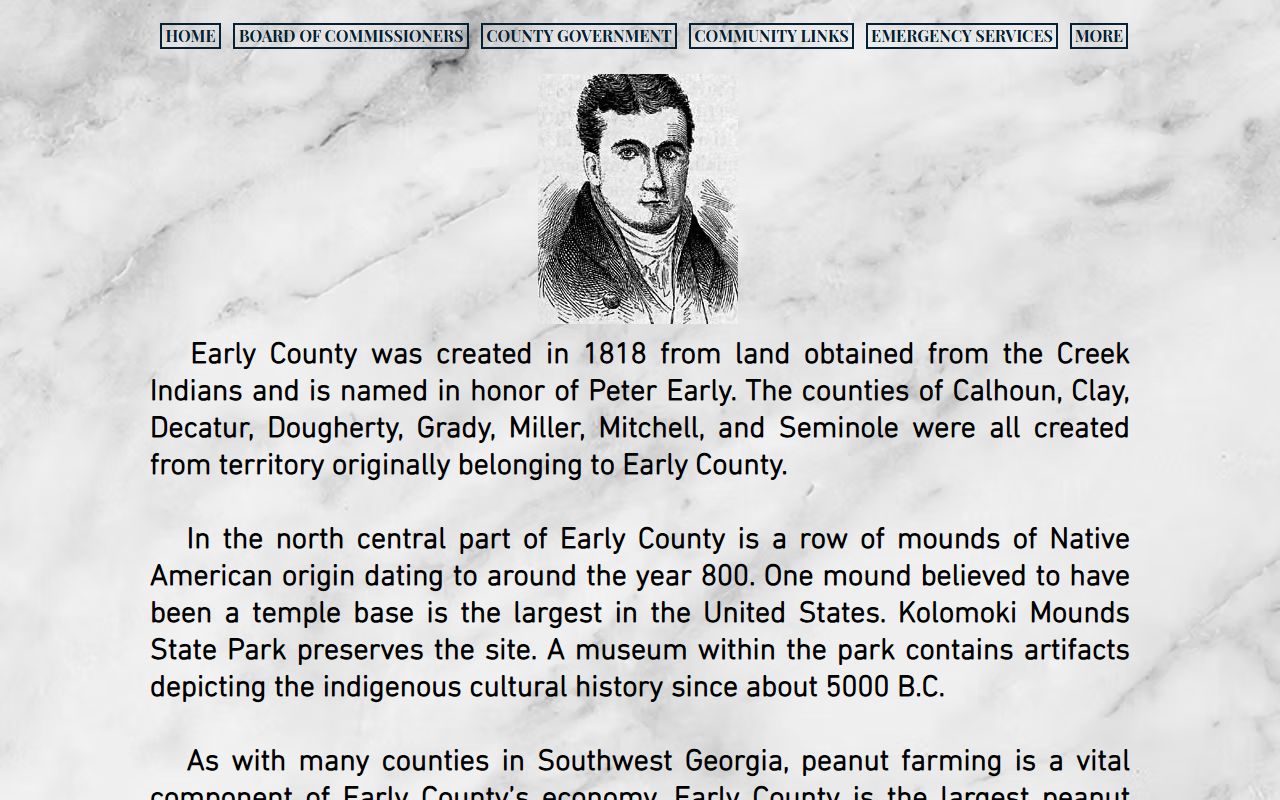
Those local history details help explain why older courthouse, land, estate, and public-notice records may require county-formation context.
Early County Court Records FAQ
Is there one Early County court records search? No. Superior and State Court provider access, GSCCCA clerk indexes, Probate Court, Blakely traffic payment, and sheriff records use different official channels.
Who keeps divorce records? Divorce decrees are Superior Court records. In Early County, start with the Clerk of Superior Court, not Probate Court or the state vital-records office.
Can jail inmates be searched online? No verified official Early County jail roster was located. Call the jail for current custody status, and use GDC only for state-prison offenders.