
Early County Superior Court Overview
Superior Court is the primary Georgia trial court for broad civil and criminal jurisdiction. In Early County, the court sits within the Pataula Judicial Circuit. That circuit serves Clay, Early, Miller, Quitman, Randolph, Seminole, and Terrell counties. The local Clerk of Superior Court manages Superior, State, and Juvenile records from the Court Square office in Blakely.
Superior Court is the court to check for felony indictments, divorce cases, equity actions, name changes, major civil filings, domestic relations matters, and appeals from some lower court decisions. A State Court or Magistrate Court matter may still appear in clerk or sheriff records, but the Superior Court case file is a distinct court record with its own filings, docket entries, orders, and disposition.
The U.S. District Court for the Middle District of Georgia is a separate federal court, not the Early County Superior Court.
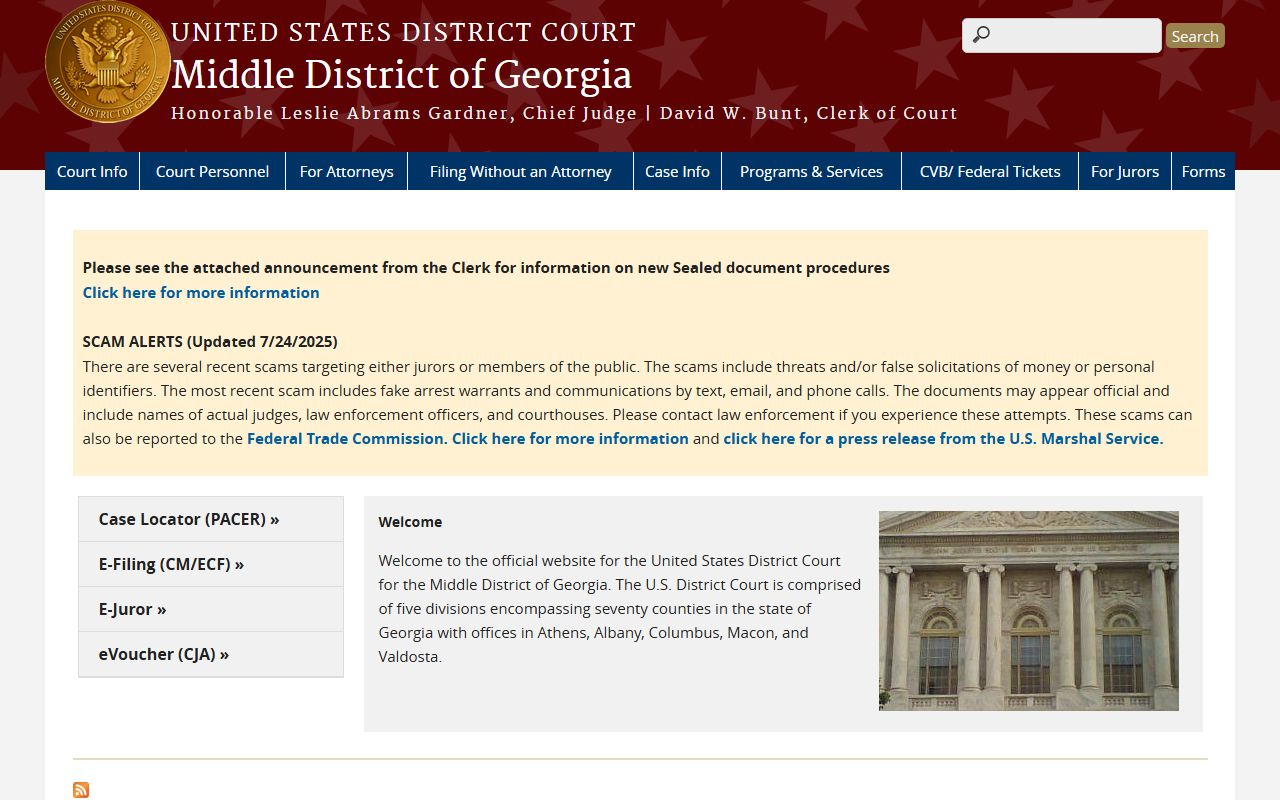
Federal court resources help when a case is federal, but county Superior Court records remain with the local clerk and Georgia court channels.
Early County Superior Court Contacts
Early County does not have a long list of separately numbered Superior Courts like some larger states. The practical local access point is the Clerk of Superior Court, with Pataula Judicial Circuit judges serving Early County and the other circuit counties. Pataula lists T. Craig Earnest as Chief Judge of the Superior Courts of the circuit and Henry L. Balkcom IV as Judge. It also lists Ronald H. Rentz as Juvenile Court judge for several circuit counties, including Early.
| Court or Office | Type | Address | Phone |
|---|---|---|---|
| Early County Superior Court | General jurisdiction trial court | 111 Court Square, Suite C, Blakely, GA 39823 | 229-723-3033 |
| Clerk of Superior Court | Records and filings | P.O. Box 849, Blakely, GA 39823 | 229-723-3033 |
| Pataula Judicial Circuit | Regional Superior Court circuit | Serves seven Southwest Georgia counties | Use assigned county clerk or circuit contacts |
| Juvenile Court | Restricted juvenile matters | Managed locally through the clerk for records administration | 229-723-3033 for routing |
Superior Court vs Lower Courts
Early County court records depend on jurisdiction. Superior Court is the broad trial court. State Court can hear misdemeanors, traffic, preliminary criminal matters, warrants, and limited civil matters where Georgia law gives it authority. Probate Court handles estates, wills, guardianships, conservatorships, and marriage licenses. Magistrate Court commonly handles warrants, small civil claims, dispossessory actions, and preliminary criminal events. Municipal Court handles Blakely traffic and ordinance cases.
| Topic | Superior Court | Probate Court | Magistrate or Municipal Court |
|---|---|---|---|
| Civil work | Major civil cases, equity, domestic relations, appeals | Estate and guardianship petitions | Smaller civil claims, dispossessory, local ordinance matters |
| Criminal work | Felony prosecutions and related orders | Not the main criminal case court | Warrants, first appearances, traffic, ordinance cases |
| Family work | Divorce and domestic relations | Marriage licenses and some guardianships | Limited or preliminary matters only |
| Records access | Clerk of Superior Court and provider routes | Probate Court counter and state forms | Court or city clerk, often direct request |
Early County Superior Case Flow
A Superior Court case begins when a pleading, indictment, accusation, appeal, or petition is filed with the court. The clerk creates or maintains the file, collects filing information and fees, and records docket events as the case moves. Criminal cases may start with law enforcement, a warrant, and Magistrate Court events before formal prosecution reaches Superior Court. Civil and domestic cases begin with petitions, complaints, service, answers, motions, hearings, and orders.
Criminal flow: arrest or warrant › first appearance or preliminary hearing › prosecutor filing › arraignment › pretrial motions › plea or trial › disposition › sentence › appeal if allowed.
Civil flow: complaint or petition › filing and service › answer › motions or discovery › hearing, mediation, or trial › judgment › post-judgment enforcement or appeal.
Search Early County Superior Records
Georgia Courts e-access lists Early Superior and Early State through provider links and states that users must have an account to search court records. Research pointed to PeachCourt-style provider access for Early Superior and State. That path is most useful when the county, court, and exact case number are known. It is not the same as an open anonymous county docket search.
For certified copies, older files, sealed-file questions, or records not found through a provider, start with the Clerk of Superior Court. The clerk's office can route Superior, State, and Juvenile administrative questions, but juvenile files are not public in the same way adult civil and criminal records are. GSCCCA is the better route for land, lien, plat, PT-61, UCC, and notary indexes.
The PACER lookup for the Georgia Middle District applies to federal cases rather than county Superior Court records.
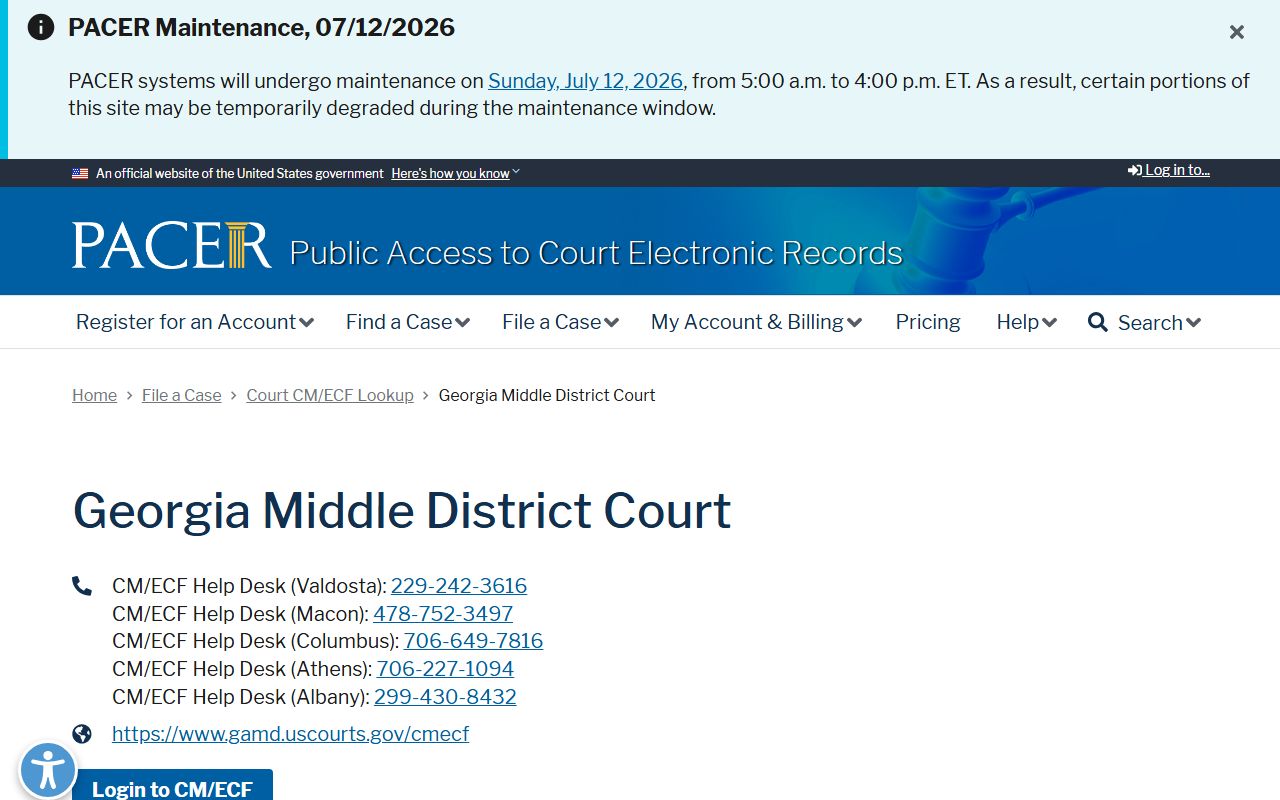
Use PACER only when the matter is in federal district court; use the local clerk path for Early County Superior Court case files.
Federal Courts Serving Early County
Early County is in the Albany Division of the U.S. District Court for the Middle District of Georgia. The Albany division serves Early County and several other counties in southwest Georgia. Federal criminal cases, federal civil suits, federal habeas cases, removals, and federal civil-rights cases are not held by the Early County Clerk of Superior Court. They are searched through federal CM/ECF and PACER.
The Albany federal courthouse is at 201 West Broad Avenue in Albany. The Middle District Albany office page identifies the division and the federal offices housed there. Bankruptcy cases are handled by the U.S. Bankruptcy Court for the Middle District of Georgia, and the bankruptcy county page lists Early County with Albany as the filing location.
The Middle District Albany division page identifies the federal division serving Early County.
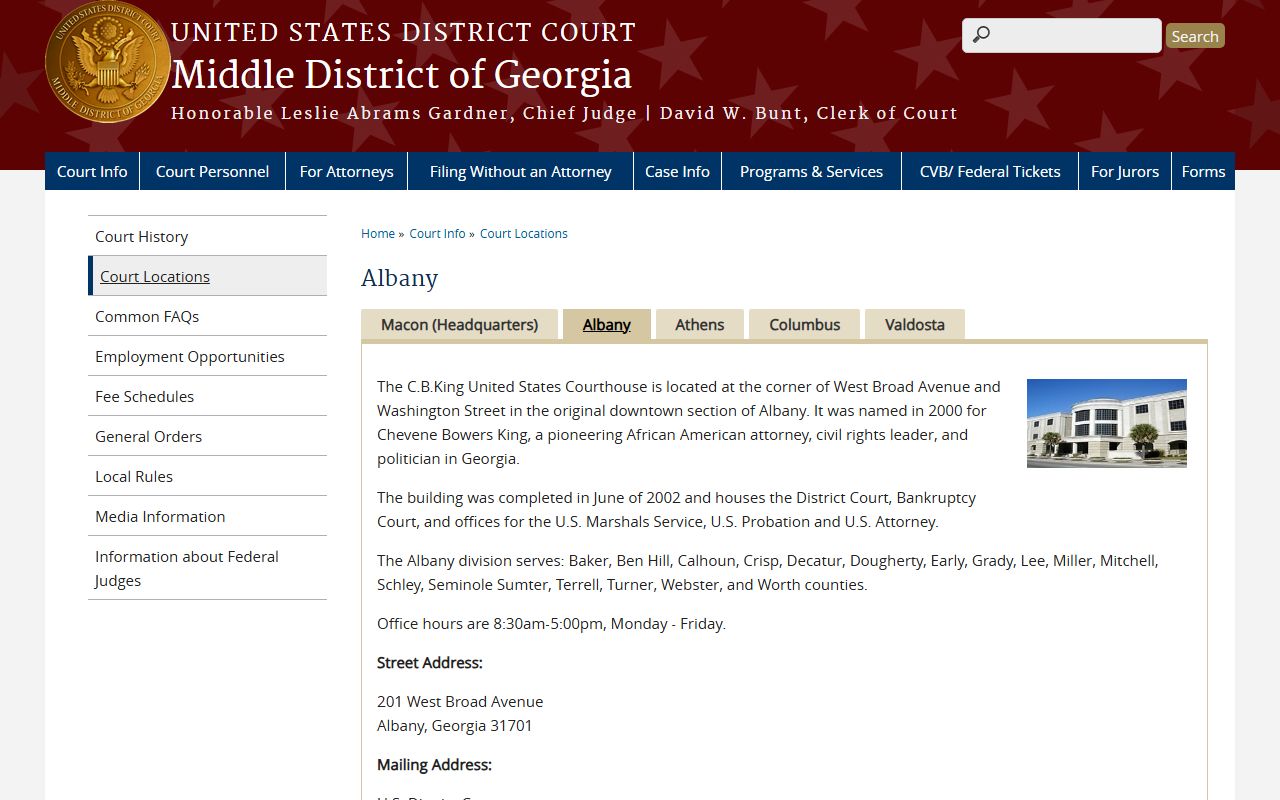
That division page helps separate federal filings from local Superior Court filings kept in Blakely.
Bankruptcy and Federal Custody
Bankruptcy records use the U.S. Bankruptcy Court for the Middle District of Georgia, not the Early County Superior Court. The bankruptcy court homepage provides federal forms, CM/ECF, opinions, local rules, and court-location resources. The county filing-location page identifies Albany as the bankruptcy filing location for Early County.
The bankruptcy court county filing list is the official place to confirm Early County's federal bankruptcy filing location.
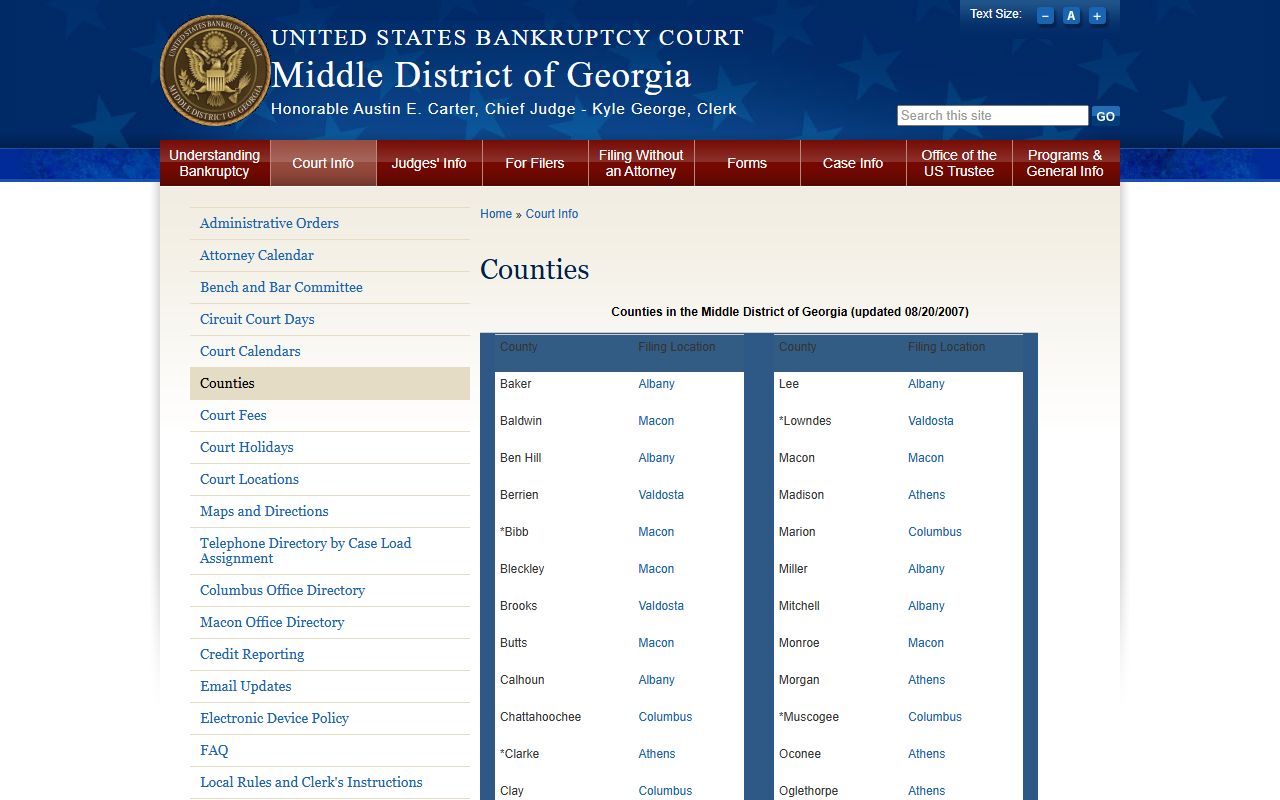
Bankruptcy filings should be searched in federal systems, while divorce, felony, and civil Superior Court filings remain local court matters.
The Middle District of Georgia Bankruptcy Court homepage provides the federal court's forms, CM/ECF resources, local rules, opinions, and training links.
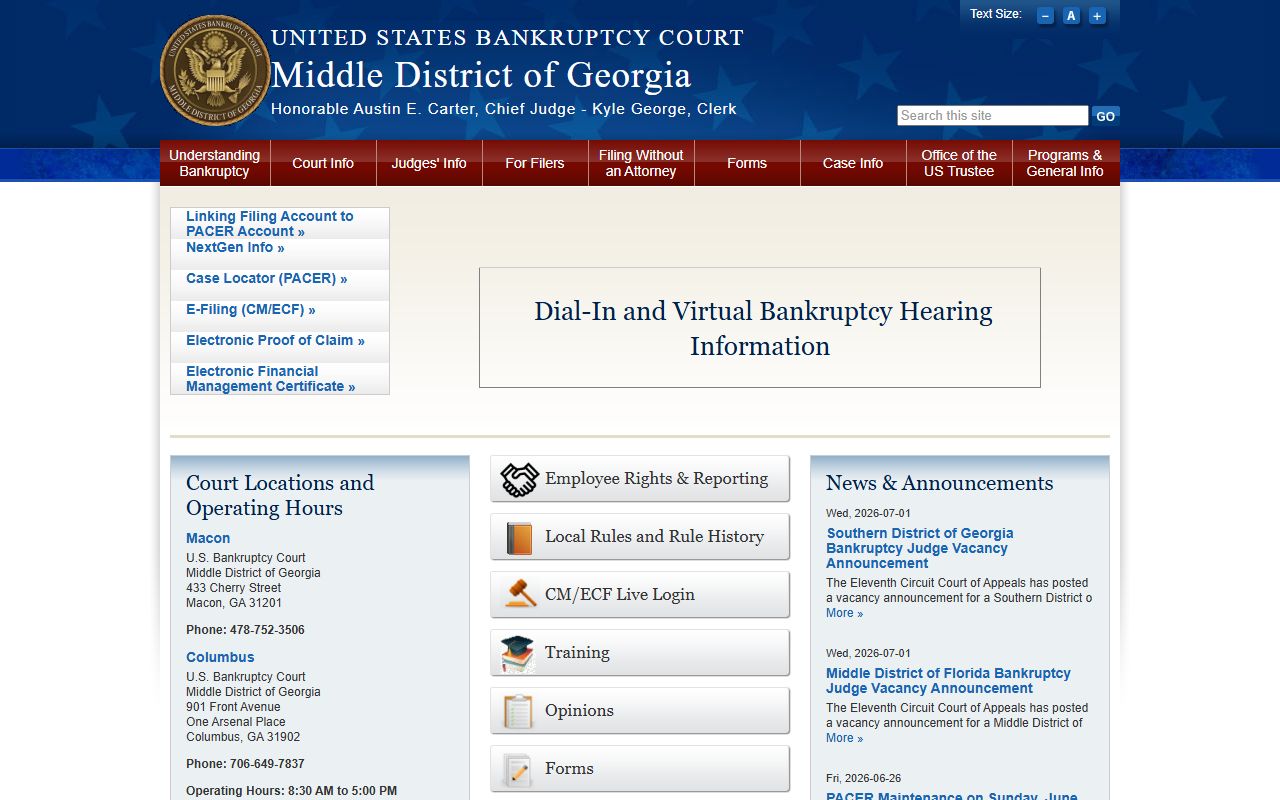
Those bankruptcy resources are useful only for federal bankruptcy cases, not for Early County Superior Court divorce, felony, civil, or domestic files.
The Federal Bureau of Prisons inmate locator is also separate from Early County Jail and Georgia DOC custody records.
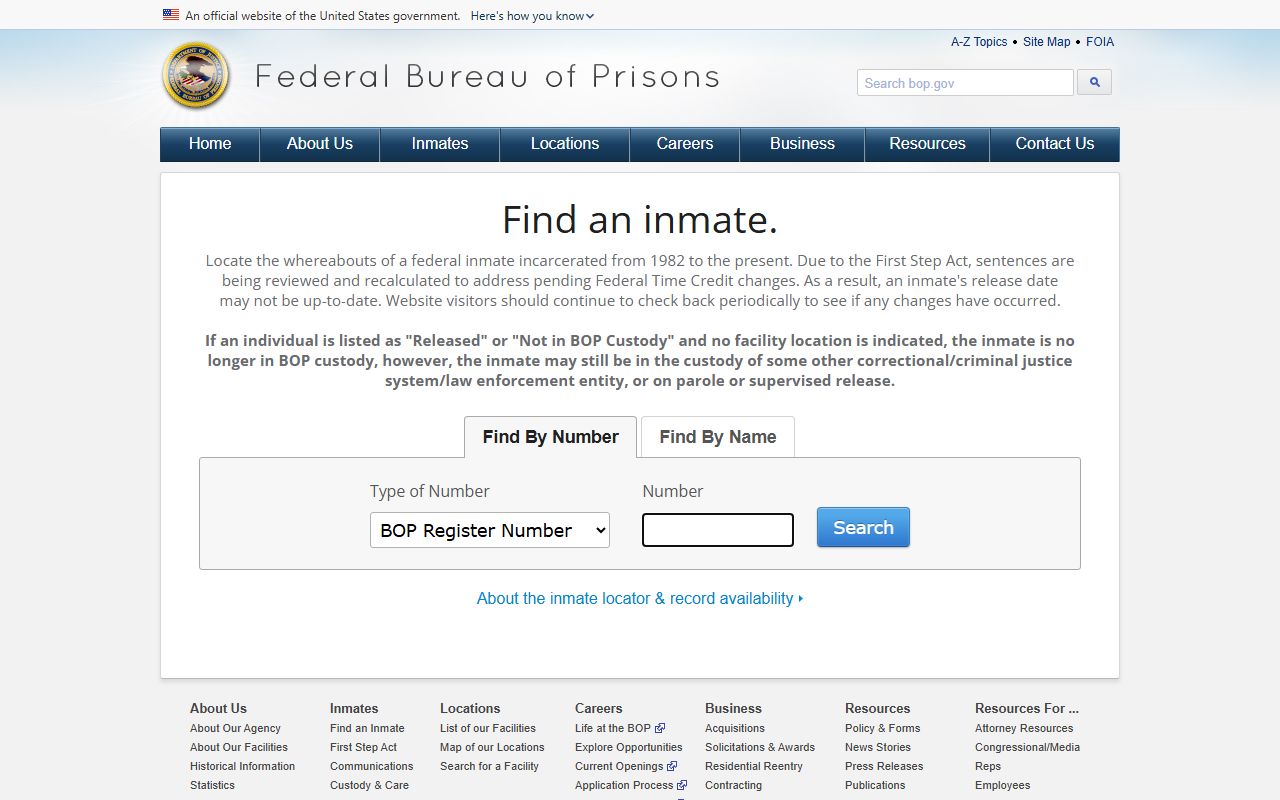
Federal custody results do not prove whether a person is in the Early County Jail, which must be checked through the county jail or sheriff.
Early County Lower Courts
Lower courts matter because many records begin there before moving, closing, or becoming part of a Superior Court file. Magistrate Court commonly handles warrants, first appearances, minor criminal matters, dispossessory cases, and civil claims up to the state limit. Blakely Municipal Court handles local traffic and ordinance matters, including tickets paid through the city payment channel. Probate Court handles estates and marriage licenses rather than divorce decrees.
When a record seeker cannot tell which court has the file, the safest first step is to identify the case type and ask the most likely custodian. The Clerk of Superior Court is the main contact for Superior, State, and Juvenile administrative records. Probate Court is the main contact for estates and marriage. Sheriff's Administration is the main route for warrants, civil processes, citations, and agency records.
Note: Call the issuing court before paying or appearing on a traffic or warrant matter because missed court dates may require direct court action.