
Early County Warrant Search
No official Early County online warrant search was located in the source sweep. The Sheriff's site gives official records, warrants, citations, and civil-process context, but it does not provide a public searchable active-warrant database. Georgia statewide guidance also points people to the local sheriff for county warrant information. That makes the local fallback chain the most reliable starting point.
The Early County Sheriff's Administration division is the key records contact because the official page says it handles agency records, traffic citations, civil processes, and warrants. The administration office is at 111 Court Square, Suite B, Blakely, phone 229-723-3214, fax 229-723-8807, and hours are 8:30 AM-5:00 PM with the office open during lunch. Sheriff William C. Price's main Sheriff's Office and Jail are at 18610 East South Blvd.; the sheriff line is 229-723-3484 and the jail line is 229-723-3150.
The Early County Sheriff's Administration page is the official local source connecting records, citations, civil process, and warrants.

Because no public database was verified, that administration contact is more useful than a broad internet warrant search.
Early County Warrant Access
Warrants can sit in different channels. Sheriff records may show service or active status. Court records may show the underlying case, bench order, bond, or disposition. Magistrate Court commonly issues arrest or search warrants and handles preliminary criminal matters, although no detailed local Magistrate Court page was found. Blakely Municipal Court can be relevant when a city traffic or ordinance case creates a failure-to-appear warrant.
| Access Route | Use It For | Contact or Limitation |
|---|---|---|
| Sheriff's Office | County warrant status, service, and agency records | 229-723-3484 or 18610 East South Blvd. |
| Jail | Custody status after a warrant is served | 229-723-3150. |
| Sheriff's Administration | Records, citations, civil process, and warrants | 111 Court Square, Suite B; 229-723-3214. |
| Clerk of Superior Court | Superior or State case-related bench warrants | 111 Court Square, Suite C; 229-723-3033. |
| Magistrate Court | Arrest warrants, search warrants, and first appearances | Local official contact page was not located; ask county offices for routing. |
| Blakely Municipal Court | Municipal citation failures to appear | Municipal Court Clerk Sherry Davis through city channels. |
Note: Georgia does not provide one statewide public warrant database for Early County active warrants in the researched official sources.
Early County Warrant Types
Different warrant labels point to different issuing bodies and next steps. The label alone does not tell the whole story. A bench warrant for a missed court date is resolved differently from an arrest warrant tied to a new criminal allegation, and a search warrant may be sealed or unavailable while an investigation is active.
- Arrest warrant: A court order authorizing law enforcement to take a person into custody.
- Bench warrant: A judge-issued warrant, often after failure to appear or failure to comply with a court order.
- Probation warrant: A warrant connected to alleged probation violations or supervision issues.
- Search warrant: A court order allowing a search of a place, item, account, or property.
- Capias or failure-to-appear warrant: A command to take a person into custody, often tied to a missed court date.
- Civil enforcement writ: A court enforcement paper such as a writ of possession or related civil process, not always a criminal warrant.
The Early County Sheriff's Civil Division page helps distinguish civil process from criminal warrant service.
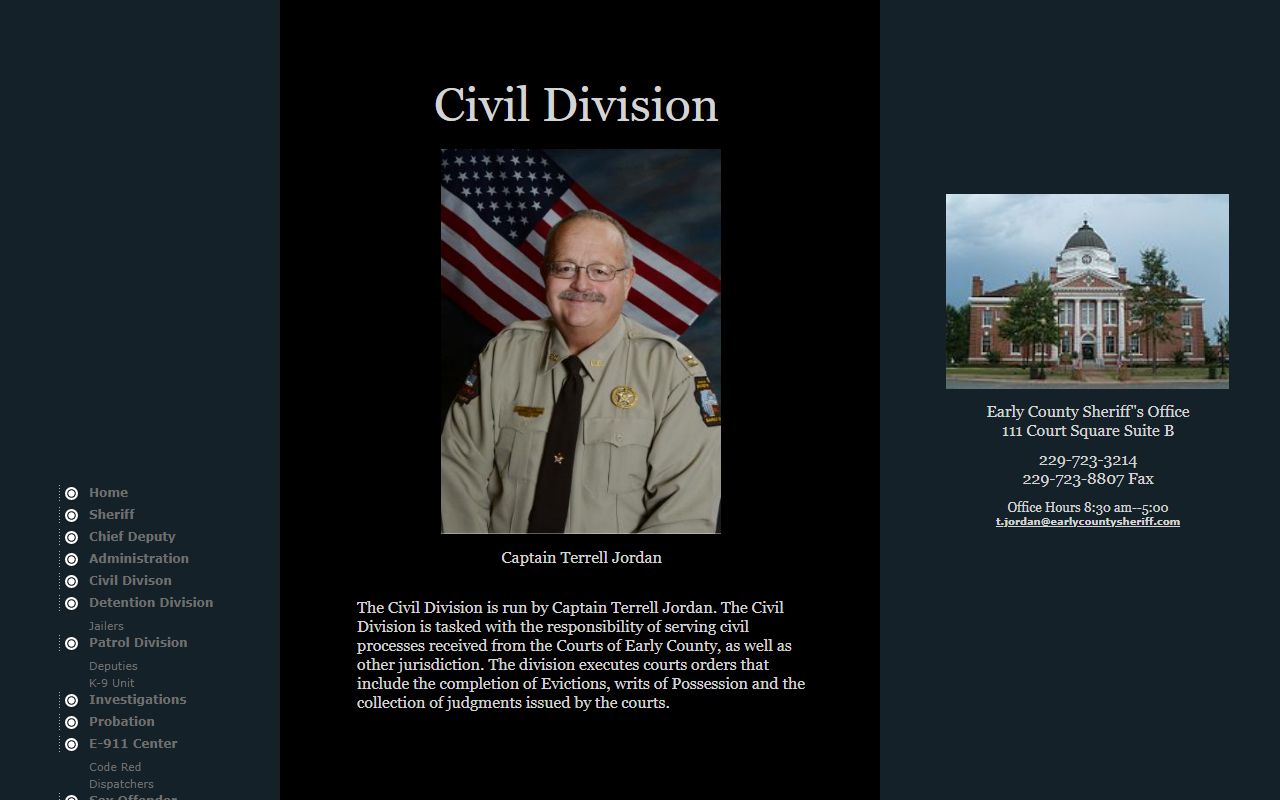
Civil process can involve court orders and sheriff service, but it should not be treated as the same thing as an active criminal warrant.
Early County Warrant Fields
Georgia.gov's warrant guidance says local sheriff offices may ask for first name, last name, date of birth, and county. Some offices provide information by phone, while others may require in-person appearance and government identification. Early County did not provide an online search form, so the field table below describes the practical identifiers to prepare before calling or visiting.
| Field | Why It Helps | Required Online? |
|---|---|---|
| First and last name | Basic identity match for sheriff or court staff. | No online form verified. |
| Date of birth | Helps separate people with similar names. | No online form verified. |
| County | Confirms the request concerns Early County, Georgia. | No statewide public search verified. |
| Case or citation number | Useful for bench, traffic, State Court, or Superior Court checks. | No online form verified. |
| Issuing court | Helps route the request to Magistrate, Municipal, State, or Superior Court. | No online form verified. |
| Government ID | May be needed if an office requires in-person verification. | Office policy should be confirmed first. |
Early County Warrant Record Inventory
No sample Early County warrant record was available without login or direct office request. A warrant record may be short or detailed depending on whether it comes from the sheriff, a court docket, a jail booking record, or an issuing judge's order. Sealed warrants and active investigations may not be disclosed to the public.
| Possible Field | What It Shows |
|---|---|
| Name and date of birth | Person named in the warrant or custody entry. |
| Warrant number | Identifier assigned to the warrant, if public. |
| Case number | Related criminal, traffic, probation, or court file number. |
| Issuing court and judge | Court authority that issued the warrant or order. |
| Offense or charge | Alleged offense, violation, or failure-to-appear basis. |
| Bond amount or type | Whether bond is set, denied, cash-only, or subject to conditions. |
| Issue and service status | Date issued, active status, served status, recalled status, or cleared date. |
| Agency and limits | Serving agency, extradition limits, or jurisdiction notes if public. |
Resolve Early County Warrants
An outstanding warrant should be handled through an official channel. Third-party warrant sites can be stale, incomplete, or wrong. The first goal is to identify the issuing court and whether the warrant is active. The second goal is to learn whether bond is set, whether a court appearance is required, and where the person must report.
- Verify the warrant through the Sheriff's Office, Sheriff's Administration, jail, or issuing court.
- Ask whether the warrant is arrest, bench, probation, traffic, search, or civil-process related.
- Ask which court issued it and whether a case number, citation number, or bond amount is available.
- For municipal or traffic failures to appear, contact the municipal court before trying to pay online.
- For criminal warrants, speak with an attorney or the public defender if eligible before surrendering.
- If surrender is required, ask where to report, when to arrive, what identification to bring, and what property rules apply.
- After resolution, request proof of clearance or disposition from the issuing court or sheriff.
Important: A warrant can lead to arrest, so legal advice should come before any voluntary appearance on a criminal matter.
DDS App Is Not Warrant Search
DDS tools can be useful when a traffic case affects a Georgia driver's license, but they are not Early County warrant apps. The research found no official Early County Sheriff mobile app or Blakely Police app. DDS 2 GO is a Georgia driver-services app that can relate to license status, driver history, or traffic consequences after court action. It should not be described as an active-warrant source.
The DDS 2 GO Google Play listing is included here only because traffic or license consequences may follow some missed-court or citation matters.
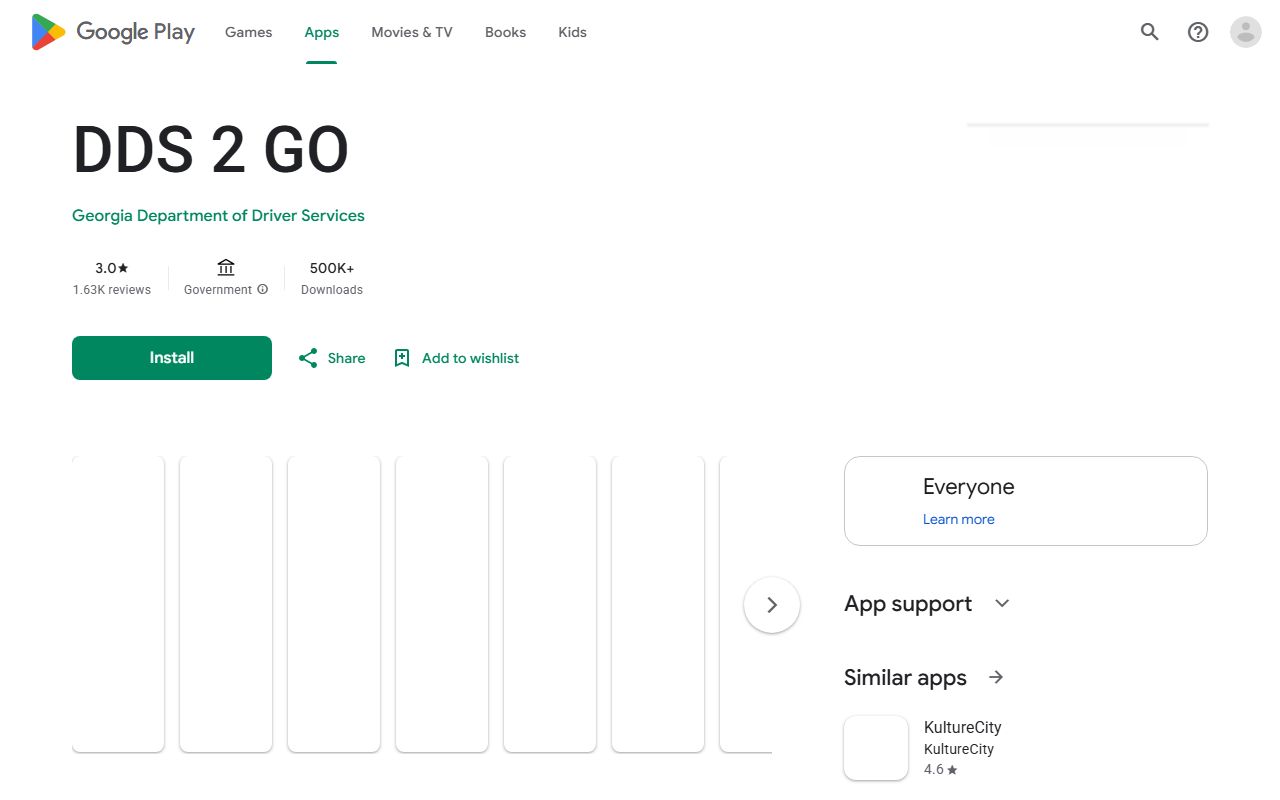
For warrant status, use the sheriff or court route first, then use DDS only for driver-license consequences tied to a traffic case.
Restricted Early County Warrants
Some warrant records are not public at the time a person asks for them. Search warrants can be sealed while an investigation is active. Juvenile matters have separate access limits. Probation or criminal warrants may include sensitive victim, witness, address, or investigative details. Court records may show a bench warrant exists while withholding protected identifiers or sealed pages.
If a warrant record is denied or redacted, ask which office owns the record, whether the denial is due to sealing, juvenile status, active investigation, or lack of a public record, and whether a court order is needed. For agency records, Georgia open-records procedures may apply. For court files, the issuing court and clerk control access under court rules and orders.